Make Money Online Red Flags: The Buyer's Checklist for Any MMO Offer
Quick answer: what are the biggest make money online red flags?
The clearest make money online red flags are an income promise with no denominator, a dollar figure baked into the product name, testimonials the seller collected but cannot verify, and pressure to buy before you read the refund terms. US rules require advertisers to hold evidence for earnings claims and to show typical, not best-case, results.
- A number without a denominator is not a statistic, it is a mood.
- A dollar amount in a title is a naming choice, not a finding.
- The refund terms are the only part of the offer you can actually rely on.

If you have spent any time researching digital side hustles, you already know the feeling: a slick video, a screenshot of a payout dashboard, a promise that this one is different. Learning to spot make money online red flags is the single most valuable skill you can bring to that search, because it lets you judge any offer, including this one, on the evidence instead of the excitement. This guide is a practical buyer's checklist. It does not tell you what to buy. It gives you a repeatable way to tell a documented business tool from a decorated income fantasy, so that when you do spend money, you spend it with your eyes open.
We publish about CashScroller, a browser-based social posting tool, and we sell nothing but our honesty about it. That means we would rather you walk away able to evaluate the whole category than be talked into a single purchase you cannot assess. So let us build the checklist first, and then run it, without flinching, against the very product this site covers.
Why make money online red flags matter more than the pitch
Every make-money-online offer is really two products stitched together. There is a tool or a method, which is a concrete thing that either works or does not. And there is a story about money, which is what the marketing is actually selling. The trouble is that the story is almost always louder than the tool, and it is engineered to bypass the part of your brain that asks for proof. The whole point of a red-flag checklist is to slow that moment down: to separate the thing you are buying from the feeling you are being sold, and to insist on evidence for the part that involves your money.
This is not cynicism, it is consumer literacy. Plenty of legitimate software gets marketed with the same breathless copy as the junk, because breathless copy converts. A checklist does not assume every offer is a scam. It assumes that claims about money carry a burden of proof, and it checks whether that burden has been met. If you want the longer version of this discipline, our guide on how to read an income claim before you buy walks through the exact questions a seller is supposed to be able to answer.
What the FTC actually requires for income claims
Here is the fact that reframes the entire category. Under US advertising law, an objective claim must be substantiated before it is made, and that duty applies with particular force to claims about money. If an advertiser tells you what you can earn, they are supposed to already hold competent and reliable evidence for it. The burden is on them, not on you, and not on the buyer who complains afterward.
Two consequences follow that most shoppers never think about. First, results shown in marketing are supposed to reflect what buyers generally achieve, not the single best outcome the seller could find. Second, a disclaimer such as "results not typical" in small print does not cure a misleading headline, because regulators judge the overall impression a reasonable person takes away, not the fine print alone. Testimonials describing exceptional outcomes are supposed to be accompanied by a clear statement of what ordinary customers can expect.
None of this is theoretical. In 2025 the operators of Publishing.com agreed to pay 1.5 million dollars to settle Federal Trade Commission allegations that included false and unsubstantiated income claims, illusory "guarantees," and deceptive testimonials. The lesson for a buyer is not that one company got caught. It is that the exact tactics named in that case, inflated earnings stories, guarantees that dissolve on contact, and cherry-picked success stories, are common enough across the category to be worth memorising as red flags.
The make money online red flags checklist
Run any offer through these ten questions. You are not looking for a single disqualifying answer. You are counting how many red flags stack up, because one is noise and five is a pattern.
1. Is there a number with no denominator?
"Members have earned over X" is not a statistic unless you know how many members there are and how many earned nothing. A figure without a denominator is designed to be misread. Ask: of how many people, over what period, and what did the typical member make?
2. Is a dollar figure baked into the product name?
When a course is literally called something like "$Ten-K Blueprint," the claim has been moved into a name, where, technically, it needs no substantiation. It is one of the oldest moves in the category, and we give it its own section below because it is so effective and so misunderstood.
3. Are the testimonials verifiable?
Screenshots of dashboards and glowing quotes are trivially produced and impossible to check. They are decoration until you can independently confirm the person, the timeframe, and whether they were paid or given the product free. Seller-collected testimonials are individual accounts, not evidence of typical results.
4. Does the urgency survive a page reload?
A countdown that resets when you refresh is not a deadline, it is a nudge. Genuine scarcity is rare and specific; manufactured scarcity is generic and everywhere. A good tool does not expire in fourteen minutes.
5. Can you find the price before the checkout page?
Offers that hide the number until you have watched a forty-minute video are managing your emotional state before revealing the cost. Transparent pricing is a quiet but reliable green flag.
6. Is the mechanism explained, or just implied?
Vague verbs, "unlock," "leverage," "designed to help you profit", create an impression while asserting nothing checkable. A trustworthy offer tells you concretely what the tool does and what you still have to do yourself.
7. Who administers the refund?
A guarantee is only as good as the party enforcing it. "We guarantee it" from the seller is weaker than a standardised return policy run by the retailer. More on how to verify this below.
8. Is income presented as automatic?
"Set it and forget it," "passive," "while you sleep." Real online income, even from good tools, is the output of work, audience, and time. Any offer that removes all three from the equation is selling a fantasy, not a workflow.
9. Does the seller disclose their relationship to the product?
Affiliates are supposed to disclose that they earn a commission. An absence of disclosure where one clearly belongs tells you how much the seller respects the rules, and you.
10. Would the tool be worth the price if it made you nothing?
This is the master question. Strip away the income story entirely and ask whether the software or service earns its price on utility alone. If the answer is no, the income story is the thing you are actually paying for, and nobody has shown you it is real.
See the offer with the story stripped out
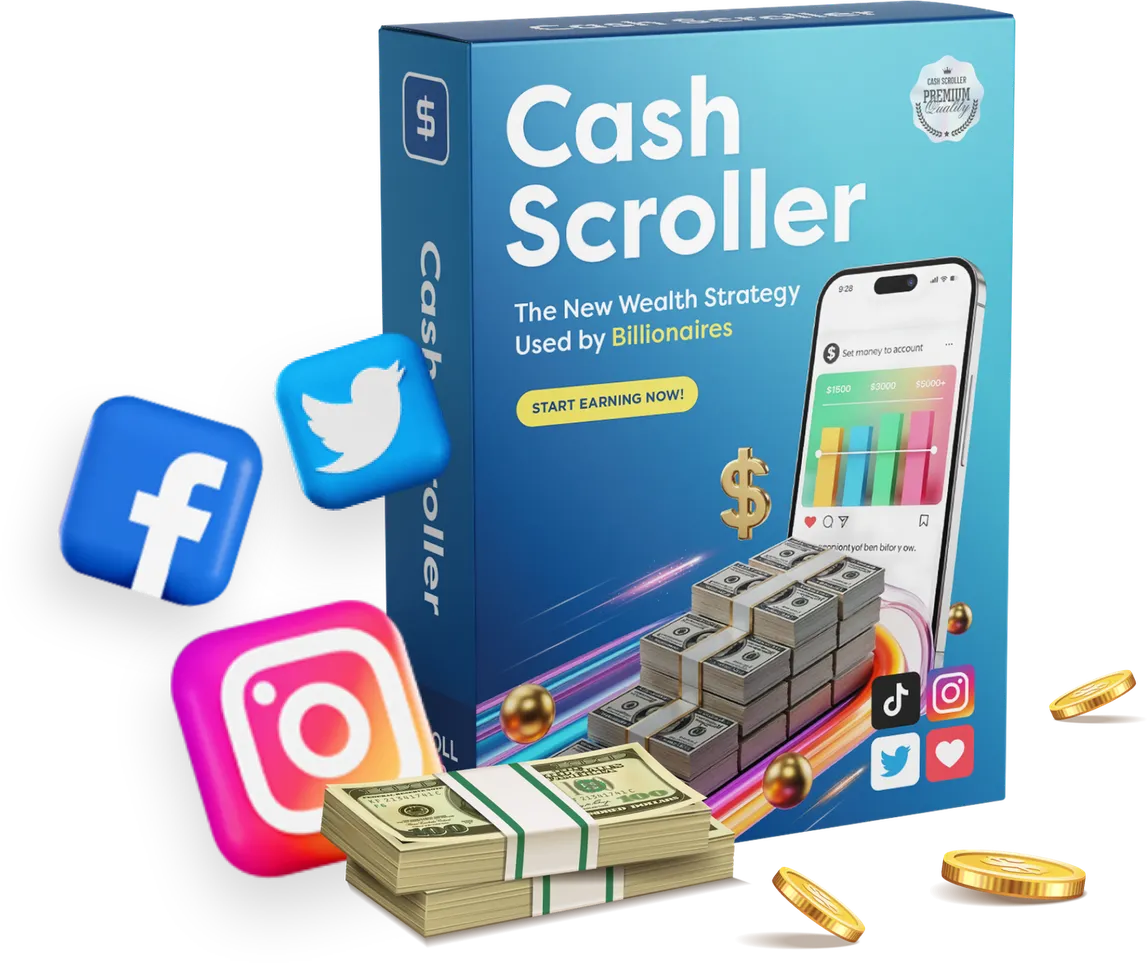
We describe what CashScroller does as a posting tool, state plainly what the vendor has not published, and make no income claim of any kind. Look at the current terms and price for yourself, then run the checklist above.
See the current CashScroller offerA dollar figure in a title is a name, not proof
Of all the make money online red flags, this one deserves special attention because it is so quietly persuasive. When a product's name contains a number, "The 5K Method," "Six-Figure Scroller," pick your poison, your brain reads it as a claim: this is what people make. But a name is not an advertising claim in the ordinary sense. It carries no denominator, no timeframe, and no obligation to prove anything, precisely because it is packaging rather than a promise. The number is doing the persuasive work of an earnings claim while sitting in the one place where nobody has to substantiate it.
The honest way to read any such title is to mentally delete the number and see what is left. If the product still sounds worth buying, good. If deleting the number empties the offer, you have just located the actual product: the number. This is exactly why we keep income figures out of our own descriptions, and why a realistic view of the category, such as our breakdown of realistic affiliate income for beginners, starts from what typical people earn rather than from a headline someone chose because it converts.
Three objections worth answering honestly
A good checklist has to survive the counterarguments, so let us take the strongest ones head on rather than pretend they do not exist.
"But there are real success stories, so it must work."
Some are real. That is not the issue. The issue is selection. A seller shows you the people it wants you to see, and even a completely honest set of testimonials is not a random sample. For every named winner there is an unknown number of buyers who earned nothing and were never filmed. Success stories can legitimately demonstrate that a method is possible. They cannot tell you it is probable, and probability is what your wallet cares about.
"It has a money-back guarantee, so what is the risk?"
A guarantee lowers your downside only if it is real and enforceable, which is a genuine reason to prefer products sold through retailers with standardised refund policies. But a guarantee is also the single easiest thing to fake, and the Publishing.com case specifically flagged "illusory" guarantees among its allegations. A promise that lives only in the sales video, with conditions that quietly gut it in the terms, is not protection. We break down how to check one properly in the next section.
"If it were a scam, it would have been shut down already."
Enforcement is real but slow, and it runs after the money, not ahead of it. Regulators act on a backlog; a product can sell hard for a long time before anyone reviews it, and many offers operate in the grey zone of technically-legal-but-misleading rather than outright fraud. "Still online" is not a clearance. It is the default state of almost everything, good and bad alike.
How to verify a money-back guarantee is real
Because the guarantee is the only part of an offer you can actually lean on, it deserves more scrutiny than the promises do. Here is the routine.
First, find out who administers the refund before you buy. Products sold through a retailer such as ClickBank are returned under that retailer's standard policy, which means you are not depending on the seller's mood on the day you ask. CashScroller, for example, is sold as a one-time digital purchase with a 60-day money-back guarantee processed through ClickBank, so the return path does not run through the vendor's inbox. Second, read the exact window, the steps required, and any conditions that could void it, then screenshot the terms at the moment of purchase so you have your own copy. Third, test the smallest possible commitment: if there are order bumps or upsells, you do not have to accept them to evaluate the core product.

If the guarantee only appears where it cannot be enforced, in the video, in a headline, in a testimonial, treat it as marketing rather than a contract. And if you ever feel misled after a purchase, use the refund window first, then know that complaints can be filed with the FTC and with your card issuer. The tools you actually control are your refund and your chargeback.
Running the checklist on CashScroller
We would be hypocrites to publish a red-flag checklist and exempt the product we cover from it, so here is the honest scorecard. CashScroller is a browser-based tool for composing, scheduling and publishing social media posts. Judged as software, question ten is the one that matters: is it worth its one-time price for what it does, independent of any income story? That is a question you can answer by looking at the feature set and the price on the order page, which is exactly why we send you there to decide rather than telling you what you will earn.
Where does it earn a red flag? Like almost everything in this category, some of the surrounding marketing leans on the money fantasy, and any bonus product whose title contains a dollar figure is a name, not a promise, per the section above. Where does it earn a green flag? The refund path runs through a retailer rather than the seller, and the tool has a concrete, checkable function that does not depend on you earning anything. Our position is consistent and boring on purpose: buy the tool for what the tool does. If you want the full audit of what the software is and what it is not, our plain-English take on how social posting tools can realistically make money lays out the work the tool cannot do for you.
Related reading
What are the warning signs of a make-money scam?
The strongest signals are an income promise with no denominator, a countdown timer that resets when you reload, testimonials the seller collected and cannot verify, a dollar figure baked into the product name, and pressure to buy before you have read the refund terms. None of these prove fraud on their own, but a stack of them means the offer is selling a feeling rather than a documented result.
What does the FTC require for income claims?
US advertising rules put the burden on the advertiser: if you make an earnings claim you must already hold competent, reliable evidence for it, and any results you feature must reflect what buyers generally achieve rather than the best case. Fine print like results not typical does not cure a misleading headline, and testimonials describing exceptional outcomes need a clear statement of ordinary results.
Are dollar figures in product titles proof of results?
No. A number in a title is a naming decision, not a finding. Because it lives in a product name rather than an advertising claim, it carries no substantiation and no denominator, so it tells you what the seller wants you to imagine, not what buyers actually earned. Treat it as packaging, and judge the tool on what the tool does.
How do I verify a money-back guarantee is real?
Find out who administers the refund before you buy. With ClickBank-sold products the retailer processes returns under a standard policy, so you are not relying on the seller's goodwill. Read the exact window, the steps required, and any conditions, then screenshot them at the moment of purchase. If the guarantee only appears in the sales video and nowhere in the terms, treat it as marketing, not a promise.
Sources and further reading
Ready to judge the offer on evidence?
Run the checklist yourself. See the current CashScroller price, features and refund terms, then decide with the income story set aside where it belongs.
See the current CashScroller offer